
Media & articles
BOA looks to unlock copper growth in WA’s Murchison belt as supply pressures build
Copper markets are tightening as demand from electrification, grid investment and AI-driven data centre expansion collides with growing concern over future mine supply.
Proactive Investors reports that backdrop is drawing renewed investor attention towards earlier-stage copper projects with existing mineralisation, historical drilling and room to grow into larger district-scale systems.
BOA Resources Ltd (ASX:BOA) is attempting to position itself in that category through the recently acquired Neds Creek Copper Project in Western Australia’s Murchison Copper Belt, where it believes multiple lightly tested prospects could support the emergence of a broader sediment-hosted copper district.
The company entered the project in late 2025, securing a 49% interest across 13 exploration tenements with an option to acquire the remaining 51%. The land package spans roughly 1,160 square kilometres and sits within the Yerrida Basin, close to Sandfire Resources’ former DeGrussa and Monty volcanogenic-hosted massive sulphide (VHMS)-style copper-gold mines in the Bryah Basin.
Rather than pitching Neds Creek as an early conceptual play, BOA is emphasising existing copper intersections, advanced targets and a drilling campaign designed to move rapidly towards resource definition.
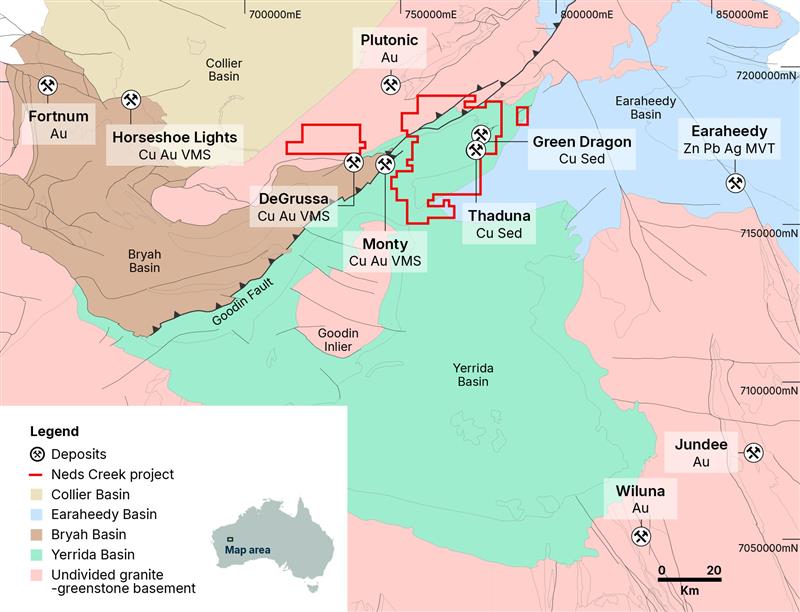
BOA tenements in Murchison Copper Belt, WA
Building around known copper systems
One of BOA’s central arguments is that Neds Creek already sits inside an established copper-producing environment.
The project surrounds the historic Thaduna and Green Dragon sediment-hosted copper deposits and contains multiple prospects interpreted to share similar geological characteristics.
BOA describes the mineralisation style as relatively straightforward: sediment-hosted, structurally controlled epigenetic copper mineralisation associated with known mineralised corridors.
That matters because exploration models become considerably more compelling when companies can point to nearby analogues with demonstrated mineral endowment.
The company plans to commence drilling during mid-2026, with an initial focus on the Ricci Lee prospect, where BOA is drawing direct comparisons with the Thaduna Copper Deposit. Thaduna historically reported a resource of 5.5 million tonnes grading 2.2% copper for 119,000 tonnes of contained copper and 829,000 ounces of silver.
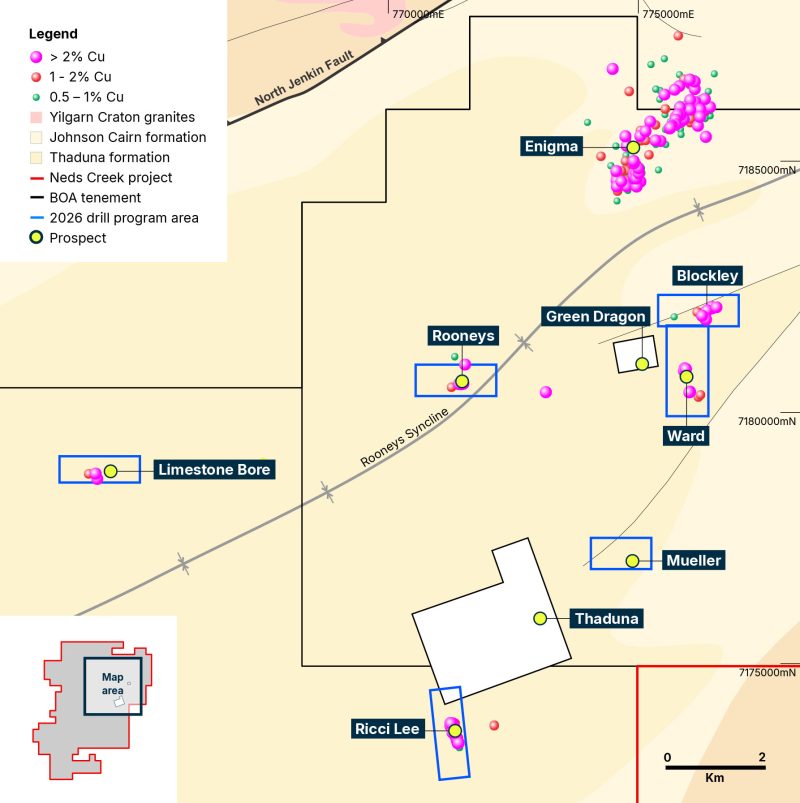
Neds Creek exploration: Drill-ready targets identified
Ricci Lee becomes the immediate drilling focus
Ricci Lee sits about 2 kilometres southwest of Thaduna and is hosted within the same stratigraphy and structural setting. The company plans a 35-hole reverse circulation drilling program totalling about 5,500 metres at the prospect.
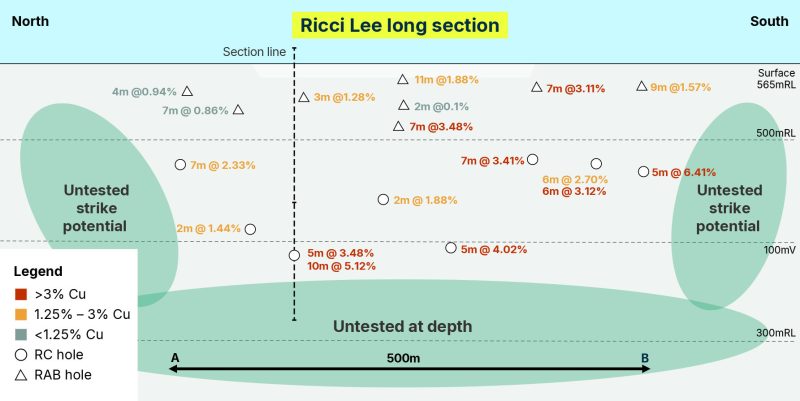
Ricci Lee Prospect
Historic drilling has already defined a copper system extending across a 500-metre strike length and roughly 200 metres vertically, while remaining open laterally and at depth. Early rotary air blast (RAB) drilling targeting historic workings in 2007 was later followed by eight reverse circulation (RC) holes that returned significant high-grade copper intersections between 2010 and 2013.
Importantly for BOA’s current thesis, little meaningful follow-up work appears to have occurred after that earlier campaign.
The upcoming program is designed to test strike continuity, depth extensions and potential plunge controls while also tightening geological understanding around the mineralised system. BOA believes there are substantial untested gaps remaining between existing drill intersections, including areas extending more than 150 metres vertically between drill holes.
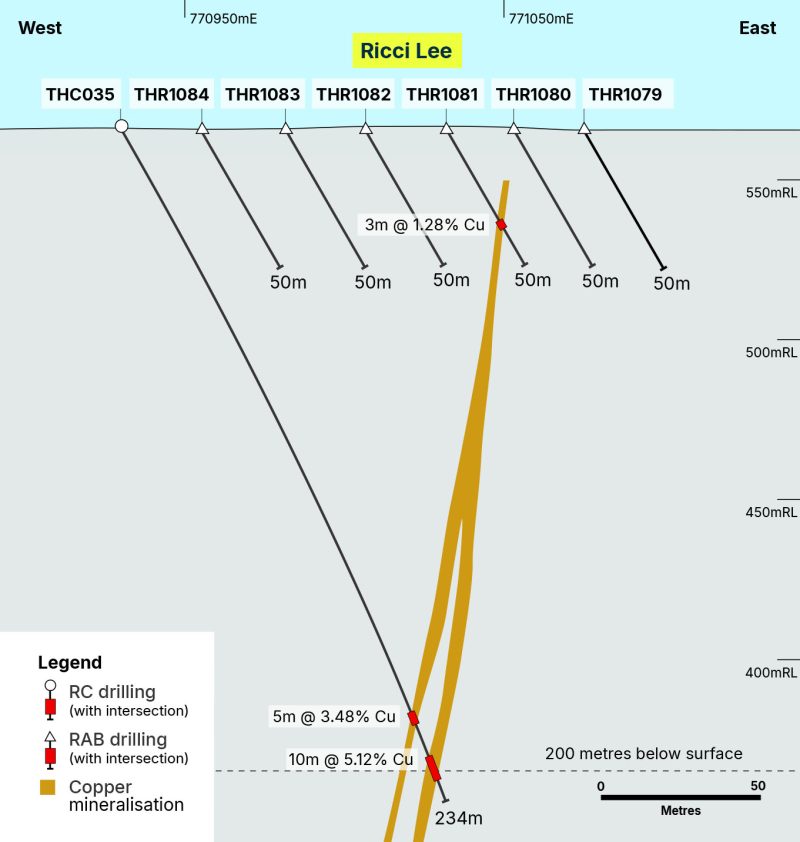
Ricci Lee Prospect
The company’s exploration team sees similarities between Ricci Lee and the geometry of the Thaduna system, including structural controls and sulphide mineralisation styles.
At Thaduna, copper sulphides reportedly transitioned with depth from chalcopyrite to bornite, associated with increasing copper grades. BOA believes understanding whether similar zonation exists at Ricci Lee could become important as drilling progresses deeper into the system.
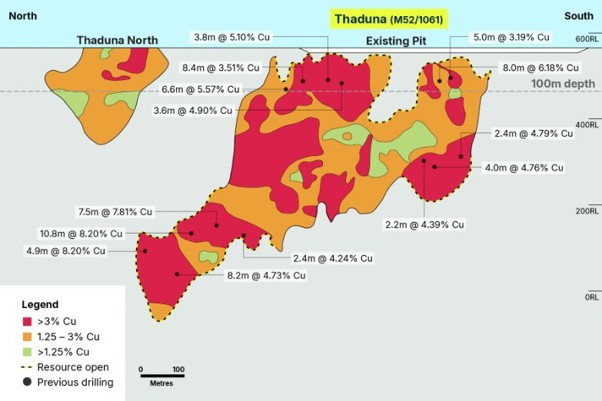
Ricci Lee Prospect vs Thaduna Deposit
Multiple targets provide broader district potential
While Ricci Lee represents the immediate focus, BOA is attempting to frame Neds Creek as something larger than a single-prospect story.
The company has identified at least eight high-priority copper targets across the broader project area, including Rooneys, Ward, Blockley, Mueller, Limestone Bore and Copper Mine Road. Several of those prospects have already returned ore-grade copper intersections from earlier drilling campaigns.
BOA plans to begin with aircore drilling across some targets to better define structural orientations before progressing to RC drilling where warranted.
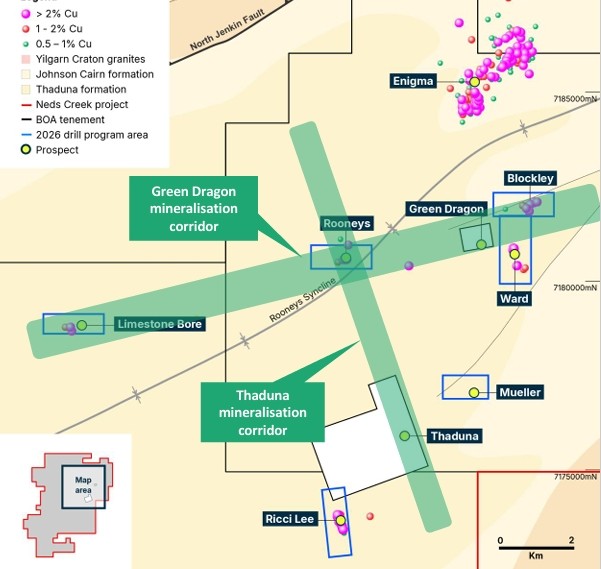
Other prospects
Enigma adds basin-scale upside
The company is also pursuing a second exploration stream through the Enigma prospect, where it believes a much larger mineralisation footprint may exist within the Johnson Cairn Formation.
Enigma differs somewhat from Ricci Lee in both scale and exploration maturity.
BOA estimates the mineralised footprint already defined at Enigma spans roughly 3 kilometres by 1 kilometre, although earlier work largely targeted shallow oxide mineralisation and left sulphide potential poorly understood.
Part of BOA’s 2026 strategy will involve improving its understanding of structural and stratigraphic controls across Enigma in order to support broader basin-scale targeting.
Machine learning joins the targeting strategy
BOA is also leaning into increasingly common data-driven exploration techniques as it builds its broader targeting pipeline.
The company is integrating extensive geophysical, geochemical and historical drilling datasets into machine learning models designed to generate, rank and prioritise additional copper targets across the project area.
While machine learning has become a frequent talking point across the exploration sector, its usefulness often depends on whether projects already contain large enough datasets to support meaningful pattern recognition.
At Neds Creek, BOA believes the combination of historical drilling, known mineralised corridors and multiple existing prospects provides enough information to improve target generation efficiency across a largely underexplored district.
The broader aim is relatively clear: identify additional “look-alike” copper targets capable of extending the scale of the project beyond any single discovery.
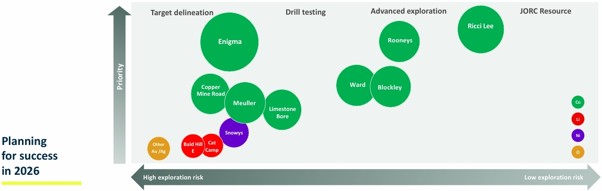
BOA: Building a copper resource and growth for 2026
Aiming for a JORC resource in 2026
BOA’s near-term strategy is unusually specific for a junior explorer at this stage. Rather than focusing purely on reconnaissance success, the company is openly targeting a maiden JORC resource during 2026.
Its ambition will depend heavily on how the first phase of drilling performs at Ricci Lee and whether mineralisation continuity supports potential resource modelling.
The company appears reasonably funded for its immediate plans, reporting roughly $3.2 million in cash and no debt as of April 2026 following recent capital raisings.
Management is also emphasising experience within the exploration team, particularly around the Neds Creek system itself. Exploration manager David Reid previously led the Thaduna-Green Dragon exploration team at Ventnor Resources, where earlier drilling contributed to discoveries across the district.
With copper supply pressures building and new discoveries becoming harder to find, BOA is entering its first major drilling phase at a time when the market is paying closer attention to emerging copper districts.
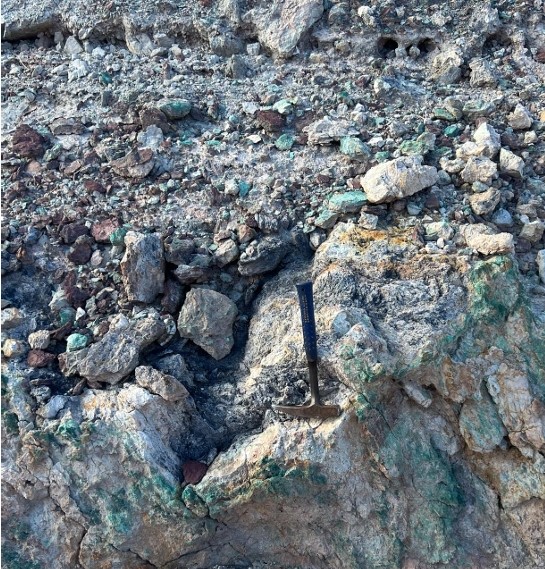
Drilling to build a copper resource with economic scale in 2026
